
Quick Answer |
What Makes a Toy Eco Friendly?
There isn’t one universal feature that turns a toy into an environmentally responsible product. Think about the toy as a complete product rather than judging it only by its main material.
A few things are worth looking at:
- Material: Is it made from wood, bamboo, fabric, recycled material or another resource?
- Sourcing: Where did the raw material come from?
- Manufacturing: How has the material been processed and assembled?
- Finish: What paints, coatings, adhesives or other finishes have been used?
- Durability: Is the toy made to handle regular use?
- Packaging: Does the packaging use unnecessary plastic or layers of material?
- Useful life: Can the toy be used for years, passed to another child or reused in some way?
This broader view is important because “natural” and “eco-friendly” are not interchangeable words. Product can contain a natural material and still have other parts that deserve attention.

Does a Wooden Toy Automatically Count as Eco Friendly?
Not necessarily. Wood is renewable when it comes from responsibly managed sources, and it can be a practical alternative to products made mainly from plastic. But simply seeing the word “wooden” on a product page does not tell you everything about the product.
For example, two wooden toys could differ in:
- the type and source of wood
- the way the wood is processed
- the paint or coating applied to it
- the adhesives used
- the amount of packaging
- the expected lifespan of the toy
This is where wooden eco-friendly toys need a little more thought than simply looking at the material in the product photograph.
Where Do Toy Materials Come From?
When one hears the phrase eco-friendly toy, the first material that comes to mind is wood. However, there are a number of different materials that one could consider when looking for toys for children
Wood
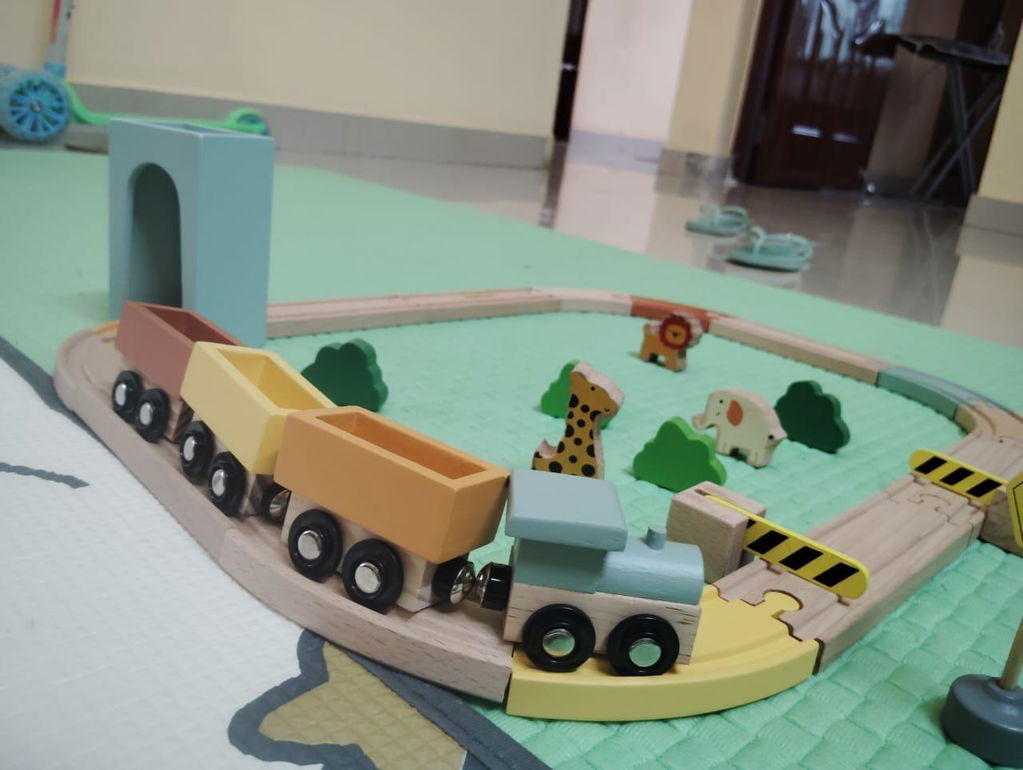
Wooden toys are widely used for blocks, puzzles, vehicles, construction sets, pretend-play toys and many traditional toy designs.
The useful question isn’t simply, “Is it wood?”
It is: Where did the wood come from, and how has the finished toy been made?
Bamboo
Bamboo grows fast and is used in some toys, for kids.. The final item might also have glue, paint or other things added to it. So the same principle applies: look at the complete product rather than one word on the label.
Cotton and Natural Fibres
Soft toys, dolls and craft products may use cotton or other natural fibres. Here, parents can look at the fabric, filling, dyes and available product information.
Recycled Materials
Some toys make use of recycled materials, which can help give existing materials another use. But recycled content alone doesn’t tell you how durable the finished product is. A toy that breaks quickly may have a much shorter useful life than expected.
Why Durability Matters More Than a “Natural” Label
A toy does not become a better environmental choice simply because its material sounds natural.
How long you actually use the toy matters too.
A sturdy toy that remains in a child’s playroom for several years can have a very different practical story from one that is quickly discarded because it breaks, becomes unusable or loses its appeal.
Durability can also give a toy a second life.
A toy that still works after one child has outgrown it can be given to a sibling, cousin, friend or another family. That helps keep the toy in use of throwing it away right away.
This is one reason Eco Friendly Toys should be thought about in terms of their life not just what they are made from. It’s not about the materials. It’s about how long they last and how many kids can enjoy them. When a toy gets passed around it’s not just saving money it’s also saving resources. That’s eco-friendly thinking.
The idea is quite simple: use a good product for longer rather than constantly replacing it.
What About Paint, Finish and Other Materials?
Wood may be the main material in a toy, but it is rarely the only material involved.
A finished wooden toy can also include:
- paint
- varnish or other coatings
- glue
- fabric
- metal components
- plastic parts
- packaging materials
- If you are buying online check the product description for details, about the materials and the finish.
That is useful information for parents because sustainability and safety are two different questions.
A product should not be considered suitable simply because it is made from a natural material.

Look Beyond the Toy: Packaging Matters Too
It is easy to forget about packaging once the toy is sitting in the child’s room. But packaging is part of the product experience.
Think about what comes with the toy:
- Is there unnecessary plastic wrapping?
- Does the box contain several layers that serve little purpose?
- Could the packaging be reused?
- Is the amount of packaging reasonable for the product?
There is no need to treat every piece of packaging as a problem. Some packaging protects a product during storage and delivery.
The point is to look at the complete purchase rather than judging sustainability from the toy alone.
How to Read Eco-Friendly Claims When Shopping Online
Online shopping makes this slightly harder because you cannot pick up the toy and inspect it yourself.
Before placing an order, read the product page carefully.
Look for:
1. Clear material information
The product page should tell you what the toy is made from instead of relying only on words such as “natural” or “green”.
2. Finish information
If paint, colours or coatings are used, see whether the manufacturer provides information about them.
3. Age recommendation
A sustainable product is still a children’s product, so age suitability remains important.
4. Product construction
Look at photographs carefully. Details such as joints, moving parts and attached pieces can tell you more about the way a toy has been made.
5. Brand information
A transparent brand should be able to explain its materials and product choices clearly.
6. Packaging
If packaging information is available check whether it gives you a picture of what you will receive.
If a product makes an environmental claim but provides almost no information to support it it is reasonable to look for more details before buying.
Eco Friendly Toys for Kids: What Should Parents Look For?
Buying Eco Friendly Toys Online: A Closer Look Before You Order
Online shopping offers a lot of choices. Just looking at a product name is not enough to know if a toy is a good fit. Take a moment to read the description. Check what the toy is made of what age it is best, for, how big it's how to keep it clean. The pictures can help a lot too especially when you want to see how the parts fit together or what the toy looks like in life.
For families searching for Eco Friendly Toys, Playbox India brings together wooden building sets, DIY kits, puzzles, pretend-play pieces and other toys suited to different interests. The range gives parents the chance to compare individual designs and find something that fits the child’s age and the kind of play they enjoy.
What also sets the Playbox approach apart is the freedom built into many of its designs. A set of wooden pieces doesn’t have to become the same thing every time. Children can build things move pieces around come up with a game or even use the parts in a totally different way from one day to the next. That kind of flexibility helps keep the toy fun for longer. It doesn't need an activity every time to stay interesting.
Why Playbox Uses Wood in Its Toy Range
Playbox India has built its toy range around wood rather than treating it as a short-term trend. The company’s own brand information describes toys as a more environmentally friendly option compared with plastic toys. It also highlights the use of high‑quality wood and non‑toxic water‑based colours for toys.
At the time it is worth keeping the distinction clear. Using wood does not by itself answer every sustainability question, about toys.
The source of the material the finish, the manufacturing process, packaging and the useful life of the toy are still an important consideration for wooden toys
That is the standard worth applying to any brand not just Playbox.
Final Thoughts Eco Friendly Toys
Start with the material. Don't stop there. Think about where the material came from. How was the toy made? What has been added to it? How long is it likely to last?. What happens to it after your child has finished using it? That way, you’re not simply buying a toy because it has been given an environmental label. You’re looking at the product as a whole.
And that is a much more useful way to shop for Eco Friendly Toys.
Frequently Asked Questions
Are wooden toys eco friendly?
Wooden toys can be a more environmentally conscious option, particularly when responsibly sourced wood is used and the toy is made to last. However, wood alone does not tell the complete story. Sourcing, finishes, manufacturing, packaging and product lifespan should also be considered.
What Are Some Eco-Friendly Toys for Kids?
The toys that are good for the environment are made of wood. They include puzzles, stacking toys, bamboo toys and natural rubber toys. From our experience in creating toys, for kids we can say that the best options are the ones made with materials safe paints that are not harmful and packaging that does not have bad things in it.
What should I check before buying an eco-friendly toy?
Check the materials age suggestions, surface finishes, construction, manufacturers details and packaging. If the product claims to be environmentally friendly make sure the product page has information to support that claim.